
Peru is a vast country that combines a long Pacific coastline, the high peaks of the Andes and the vast Amazon rainforest. These varied landscapes lie within relatively short distances of each other — you can travel from Lima to the jungle in a single day — which helps explain why Peru is a top destination for adventurous travelers.
One of the country’s most enduring draws is the iconic Inca citadel of Machu Picchu, perched in forested mountains near the city of Cuzco. Visiting Machu Picchu requires some planning, but the experience is widely regarded as worth the effort. The site’s dramatic setting, stone architecture and misty mountain atmosphere make it a highlight for visitors from around the world.
Machu Picchu is one of the most photographed archaeological sites on the planet. Photos rarely capture the full effect: to understand why the Incas selected this location you need to see the mist sweeping across terraces and climb the stone paths to Inti Punku, the Sun Gate. Constructed around 1450–1460 and abandoned roughly a century later, the city escaped discovery by the Spanish conquistadors and remained little known until Yale archaeologist Hiram Bingham brought it to international attention in 1911. Despite large numbers of visitors today, the site’s sense of wonder endures.
Most travelers reach the region by flying into Cuzco’s Alejandro Velasco Astete Airport or by traveling overland on tourist buses. From Cuzco there are several ways to continue into the Sacred Valley and onward to Machu Picchu. Trains run to Aguas Calientes — the town at the base of the site — and the journey takes about three hours. Two main operators, Peru Rail and Inca Rail, serve the route, though regular tourist services depart from stations outside central Cuzco. Many travelers take a short bus or taxi to Poroy to board the train. Ticket options range from standard seats to premium services such as Peru Rail’s Hiram Bingham, which includes gourmet meals, drinks, onboard entertainment, entrance tickets and a guided tour. For those who prefer active travel, hiking to Machu Picchu is a popular and rewarding alternative.
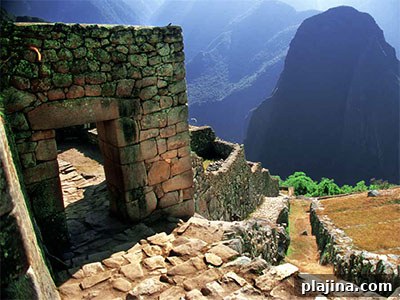
Steps to a ruin overlooking the Sacred Valley © PAVALACHE STELIAN – DREAMSTIME.COM
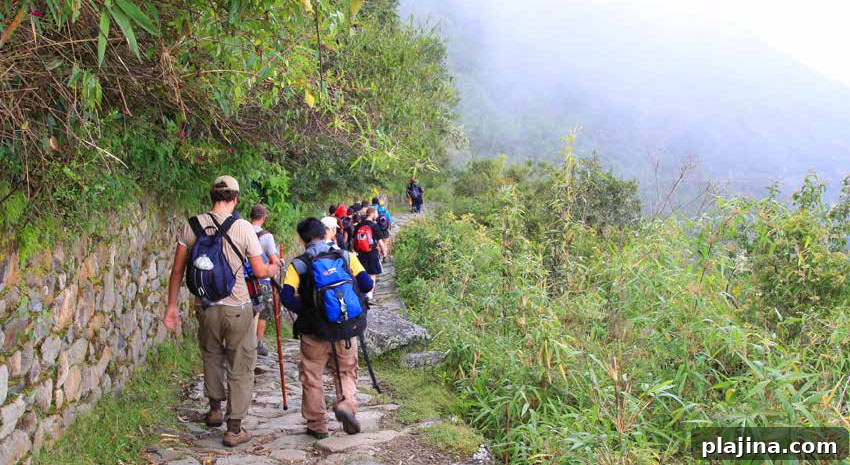
The classic trekking route is the Inca Trail, a four-day hike that follows ancient stone paths through cloud forest and high puna. This trail represents only a small portion of the vast network of routes the Inca built centuries ago, yet the segment leading to Machu Picchu is particularly famous. The narrow, often steep stone pathways can be physically demanding: many of the stepping stones and terraces were constructed with dramatic inclines. Historically these routes linked settlements and facilitated movement across rugged terrain, and the section now known as the Inca Trail served mainly for pilgrimage. The roughly 26-mile route moves through diverse ecological zones, passes several archaeological sites and culminates at Inti Punku, where Machu Picchu unfolds below.
Because the Inca Trail is very popular, authorities limit daily visitor numbers and occasionally close sections for maintenance. Check the latest availability and book well in advance to secure a permit. If permits for the classic trail are unavailable, the Salkantay Trek is a widely chosen alternative. Although it typically reaches Aguas Calientes via a different route — rather than arriving through the Sun Gate — Salkantay offers spectacular scenery and can be a more budget-friendly option.
Budget-minded travelers sometimes take public transport through the Sacred Valley to Santa Teresa and then hike along the railway tracks to Aguas Calientes in a single day. This route is inexpensive and provides a different perspective on the landscape. Many visitors extend their trip with an overnight in Santa Teresa to enjoy the local thermal baths and recover from the hike.
Whichever route you choose, a visit to Machu Picchu is an unforgettable experience. The combination of outstanding stonework, mountain scenery and historical significance makes it one of Peru’s unmissable attractions. Standing among the ruins with the jagged Andes rising around you is a moment that many travelers describe as life-changing.
Machu Picchu Info to Go
Alejandro Velasco Astete Airport in Cuzco is the nearest airport serving travelers heading to Machu Picchu. It offers frequent domestic flights to Lima (LIM), Arequipa (AQP), Puerto Maldonado (PEM) and Juliaca (JUL), and less frequent international connections to cities such as Santiago (SCL), La Paz (LAP) and Bogotá (BOG). The airport is just over three miles from Cuzco’s center. Local minibuses known as “combis” run regularly, but if you have significant luggage or prefer convenience, a private shuttle or taxi is usually the best choice.