
Calling all aviation enthusiasts: if aircraft captivate you, a visit to a premier aviation museum is essential. Nestled in the Arizona desert, this exceptional destination is a bucket-list experience for lovers of military and commercial flying machines.
The Pima Air & Space Museum in Tucson, Arizona, is one of the largest nongovernment-funded aerospace museums in the world. Since opening in 1976, the museum has grown to display nearly 400 aircraft and some 125,000 artifacts across 80 acres of the Sonoran Desert.
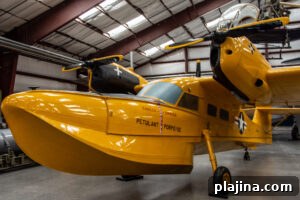
PHOTO: © KARIN PEZO
The museum’s collection covers the full history of flight, from early pioneers to modern airliners. Highlights include a Wright Flyer, the world’s smallest biplane, presidential aircraft, Soviet MiGs, a Lockheed SR-71 Blackbird and an F-14 Tomcat, as well as contemporary jets such as a Boeing 787 Dreamliner. Many aircraft are displayed outdoors across the desert grounds, while six indoor hangars protect and interpret historically important planes. Three hangars focus specifically on World War II history, and one operates as an active restoration facility.
Because the exhibits and grounds are extensive, consider taking the guided 45-minute Public Tram Tour, offered daily and subject to change. The narrated, 1.5-mile circuit highlights more than 150 aircraft and is led by knowledgeable guides who explain each plane’s significance and history. The tram is a convenient way to see the collection, especially for visitors with limited time or mobility constraints.
On a personal visit, I chose to walk the grounds and spent about three hours exploring the sprawling array of military and commercial aircraft. From a historic Air Force One that served Presidents John F. Kennedy and Lyndon B. Johnson to the Navy’s four-engine turboprop Lockheed P-3 Orion and the modern Boeing 787 Dreamliner, the variety and scale of the machines on display are impressive and often awe-inspiring.
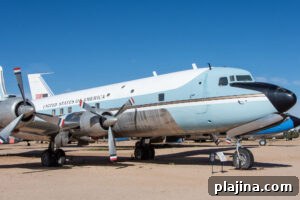
PHOTO: © KARIN PEZO
One aircraft I hoped to see was the Convair VC-131H, the military variant of the Convair CV-580. That particular plane served as Air Force One during the administrations of Presidents Johnson and Nixon and later flew VIP missions for the Navy. Although I didn’t find it on display that day, the breadth of the collection made up for the absence. The variety of aircraft, representing multiple services and eras, encouraged me to return for additional visits—this museum easily rewards repeat trips.
General admission to the Pima Air & Space Museum includes access to the Arizona Aviation Hall of Fame and the 390th Memorial Museum, both located on the site. The Arizona Aviation Hall of Fame, housed in the Dorothy Finley Space Gallery, honors Arizonans who contributed significantly to aviation and aerospace, including figures such as former U.S. Senator Barry Goldwater, astronaut Frank Borman and Doolittle Raider David “Davey” Jones.
The 390th Memorial Museum preserves the history of the 390th Bomb Group, which flew B-17 Flying Fortresses over Europe during World War II. Among its notable displays is the last B-17 flown by any U.S. military branch—the only fully restored, combat-ready B-17 on public display in the United States. Exhibits also cover the 390th’s contributions to the Allied campaign in Europe and the experiences of the 731 airmen from the group who were captured and held as prisoners of war.
Although public tours to the nearby “Boneyard” at Davis-Montham Air Force Base have been permanently suspended for security reasons, the museum still provides information about this vast storage and reclamation site. Spanning 2,600 acres, the Boneyard is home to thousands of surplus military aircraft: some are cannibalized for parts, others are restored to flying condition, and some are ultimately retired for disposal. While access to the Boneyard is restricted, the museum’s exhibits and outdoor displays allow visitors to learn about the site’s role in preserving aviation history.
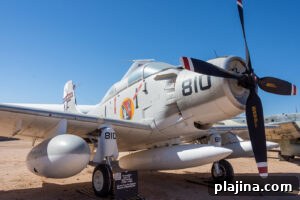
PHOTO: © KARIN PEZO
The Pima Air & Space Museum offers an immersive, educational experience for aviation buffs, families and photographers alike. Outdoor displays set against the desert backdrop make for memorable visits, and the museum’s ongoing restoration work highlights the effort required to preserve these historic aircraft.
INFO TO GO
The museum is about a five-minute drive from Tucson International Airport and roughly two hours from Phoenix Sky Harbor International Airport. Private pilots can consider landing at nearby Ryan Field. Bring plenty of drinking water, sunglasses, a wide-brimmed hat and sunscreen—the desert sun can be intense and shade is limited.