
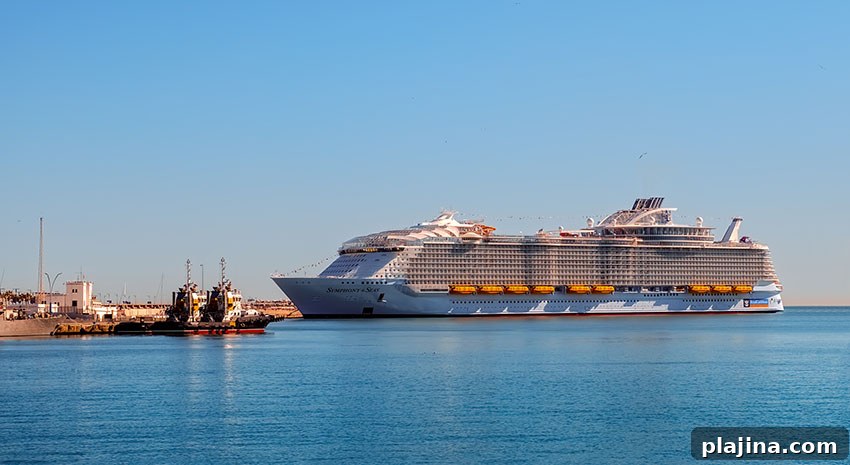
Royal Caribbean’s Symphony of the Seas, the world’s largest cruise ship, recently made its first U.S. port call at Port Canaveral. The vessel arrived carrying nearly 5,500 guests and about 2,200 crew members as it begins its North American deployment.
Constructed at a cost exceeding $1 billion, Symphony of the Seas has a maximum capacity of approximately 6,680 passengers and 2,200 crew. The ship launched on its maiden voyage on April 7, spent time cruising the Mediterranean and then crossed the Atlantic to reach its new itinerary.
Captain John Murray, CEO of Port Canaveral, emphasized the importance of smooth operations for a vessel of this size and profile. He noted that even though the ship will be home-ported in Miami, Royal Caribbean trusted Port Canaveral’s ability to handle the vessel for its first U.S. stop. Efficient customs clearance and Coast Guard inspections were essential to avoid delays and maintain a positive experience for guests.
“We’re proud of the confidence our partners at Royal Caribbean have in us,” Captain Murray said. “As a brand-new ship coming from a foreign port, it was important that all inspections and clearances proceeded quickly and efficiently. Many dedicated professionals and strong teamwork supported the arrival of the world’s largest and most sophisticated cruise ship.”
The arrival highlights Port Canaveral’s capacity to accommodate mega-ships and underscores the ongoing collaboration between cruise lines and port authorities to deliver seamless embarkation and port calls. With its combination of scale, amenities and advanced systems, Symphony of the Seas represents the latest generation of large cruise vessels designed to offer diverse experiences while operating within established safety and regulatory frameworks.
Passengers on board the ship can expect the full complement of entertainment, dining and recreational options that define today’s large cruise ships. From family-friendly attractions to adult-focused venues, the ship’s design is centered on providing a range of choices for different traveler preferences, while crew members support daily operations and guest services throughout the voyage.
Port Canaveral’s handling of the arrival also demonstrates the importance of coordination among port staff, federal inspection agencies and cruise line teams when processing large numbers of travelers and crew. Such coordination helps minimize turnaround times, ensures compliance with regulatory requirements, and contributes to a positive image for both the port and the cruise operator.
As Symphony of the Seas continues its season, guests and observers will be watching how the ship integrates into regional itineraries and how ports manage visits from increasingly large vessels. The initial stop at Port Canaveral serves as a notable example of operational readiness and partnership between industry stakeholders.