
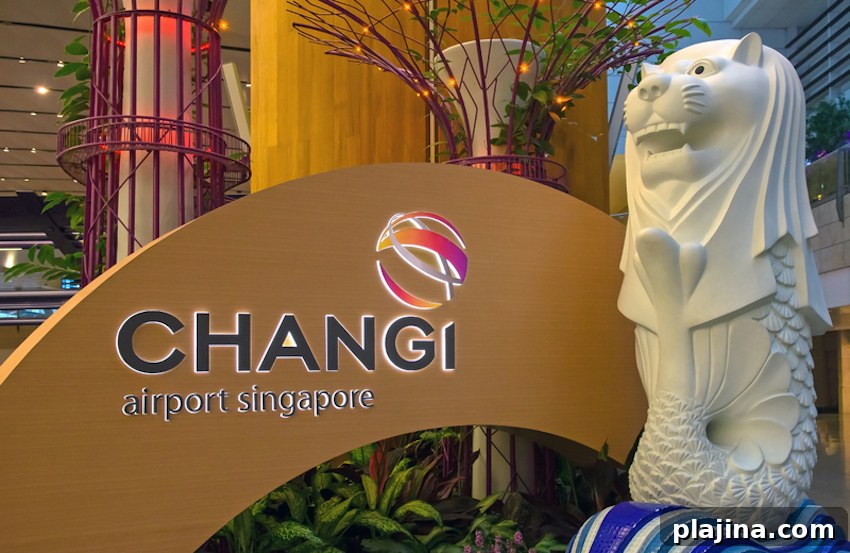
To meet rising demand, Singapore is planning a fifth terminal at Changi Airport, with the new facility expected to be operational by 2030.
Changi Airport, one of Asia’s busiest hubs, has expanded several times to handle increasing passenger volumes. In 2018 a record 65.6 million passengers used the airport, a 5.5 percent increase over the previous year, and demand is projected to continue rising. The International Air Transport Association forecasts that passenger traffic across the Asia-Pacific region will more than double over the next two decades, adding pressure on major airports like Changi to grow capacity and modernize services.
In addition to the new terminal, recent additions at Changi include Jewel Changi Airport, a mixed-use attraction connected to the terminals that opened to the public with retail, dining and leisure features. Jewel offers an early check-in area, an indoor rainforest with the world’s tallest indoor waterfall, walking trails, canopy mazes and family-friendly slides, creating a seamless blend of transit and visitor experience.
Changi’s upgrades also involve renovating existing terminals to increase passenger throughput and comfort, and implementing automated baggage handling systems to improve efficiency and reduce wait times. These measures support smoother connections and better on-ground operations as flight and passenger volumes grow.
Beyond the airport, Singapore has invested in a range of infrastructure projects to enhance its appeal as a regional travel and logistics hub, including a new port scheduled to open in 2021. Together, these developments aim to strengthen Singapore’s position as a major gateway for air and sea traffic while improving the travel experience for millions of visitors each year.