
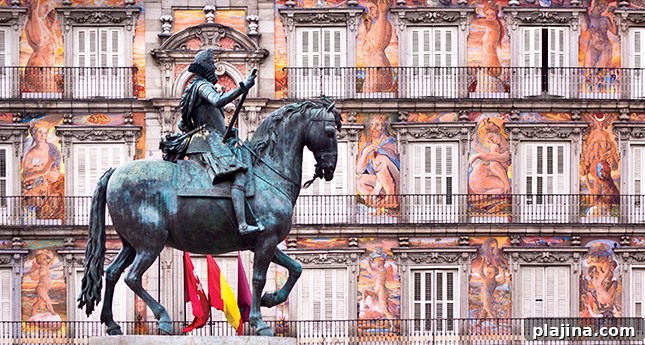
Photo: Matej Kastelic/Dreamstime.com
In the first half of 2011 Madrid felt the strain of national troubles: protests filled Puerta del Sol as citizens voiced anger at high unemployment, the banking sector and government austerity measures aimed at navigating the recession. Young demonstrators and diverse groups made their concerns visible in one of the city’s most prominent public spaces.
For many years Spain had outpaced most of its Eurozone neighbors, but recent economic shifts made clear that no country was immune to global macroeconomic forces. Austerity measures in Madrid and across Spain helped avoid the worst outcomes experienced by Greece, Portugal and Ireland, yet unemployment remained a pressing issue.
That year brought other challenges as well: Spain’s restaurant owners, farmers and exporters protested assertions that Spanish produce was linked to an E. coli outbreak in Germany, and football fans suffered a blow when FC Barcelona defeated Manchester United to win the UEFA Champions League. Still, these setbacks were short-lived.
With summer came a resurgence of everyday Madrid life. Outdoor cafés, museums, parks and shopping areas filled with tourists from June through October, boosting the hospitality sector and helping to restore confidence. A growing meetings and conventions industry added momentum, contributing to a 5 percent rise in hospitality jobs and steady visitor flows that eased some recession worries.
Investigations ultimately cleared Spanish vegetables of causing the German food scare, and football supporters joined national celebrations despite club rivalries. The city also moved past disappointment over unsuccessful Olympic bids for 2012 and 2016 and looked ahead to future possibilities, with leaders expressing interest in bidding again for 2020.
For a time the tent encampment in Puerta del Sol was removed as residents and visitors enjoyed warm summer and autumn days. Although economic protests continued in various forms, tourism provided vital income: some 19 million visitors arrived in Spain during the first five months of 2011, an increase of nearly 8 percent over the previous year, bringing much-needed revenue to Madrid and other cities.
Under Mayor Alberto Ruiz-Gallardón, Madrid weathered the end of a decade-long housing boom while proceeding with planned developments. A major milestone was the completion of Project Calle 30, an extensive urban renewal initiative that routed much of the noisy M30 ring road underground. The result is Madrid Río, an expansive green corridor of about 13 million square feet featuring fountains, sports fields, children’s playgrounds and elegant bridges spanning the Manzanares River.
The city has pursued sustainability initiatives as well, replacing diesel taxis with hybrid vehicles and adjusting parking and traffic regulations to ease congestion. Public health measures mirrored trends across Europe: smoking is banned in bars, restaurants and cafés and restricted in many other public spaces.
Historic neighborhoods have reinvented themselves. Ballesta, once known as a red-light district, is now a fashionable quarter of galleries, cafés and boutiques. Even the Prado Museum has refreshed its offerings, opening 12 new galleries and displaying 176 additional works, including recent acquisitions previously unseen by the public.
Despite manufacturing slowdowns, Madrid’s meetings and conventions sector remained a strong economic driver. The city rose in international rankings for conference destinations and hosted more meetings and participants than in previous years. In 2010 Madrid moved from 13th to sixth place among nearly 2,000 cities tracked by the International Congress and Conventions Association, staging 14,095 meetings (a 23 percent increase) and welcoming more than 1.2 million participants (a 25 percent increase). Direct spending in the sector exceeded €1 billion, supporting stable hotel occupancy, restaurant employment and visits to cultural attractions.
DIVERSIONS
Madrid is a leading museum city in Europe. The Museo Nacional del Prado on Paseo del Prado houses masterpieces such as El Greco’s Portrait of a Nobleman with His Hand on His Chest, Velázquez’s Las Meninas, Rembrandt’s works and a large permanent Goya collection. Nearby, after a stroll through the Botanical Gardens, the Museo Nacional Centro de Arte Reina Sofía displays Picasso’s Guernica and works by Miró, Dalí, Solana and Henry Moore; the museum’s modern expansion includes striking glass elevators on its façade.
CaixaForum on Paseo del Prado is notable both for its exhibitions and for the building itself, a former power plant redesigned by Herzog & de Meuron, featuring a vertical garden and a memorable stainless steel staircase. The Museo Thyssen-Bornemisza at the Palacio de Villahermosa offers a wide European collection from the 13th through the late 20th centuries and includes a rooftop terrace restaurant, El Mirador del Museo, overlooking the Paseo del Prado.
Shopper-friendly neighborhoods like Salamanca offer many boutiques, while the outlet-style Las Rozas Village, about 12 miles from the city center, features over 100 European and international brands along with several restaurants. For sports fans visiting between September and May, tickets to matches at the Santiago Bernabéu Stadium, home of Real Madrid, are highly sought after.
Madrid is well connected by high-speed AVE trains, which make day trips to Seville, Barcelona (roughly 2.5 hours) or Valencia (about 90 minutes) convenient options. RENFE operates AVE services across Spain, enabling short excursions to other major destinations.
CHECKING IN WITH
Julio A. Olivares
President and CEO, DocPath
HAS SPAIN’S ECONOMIC CRISIS ADVERSELY AFFECTED MADRID’S SOFTWARE AND HIGH-TECH INDUSTRIES?
Economic downturns in the United States and Europe have had an impact, but the high-tech sector often serves markets beyond national borders, which helps many firms sustain and even grow during difficult periods. Spain benefits from a talented generation of engineers. Many companies, including ours, locate development centers outside Madrid—in places like Ciudad Real, where a nearby university supplies a steady stream of software graduates—so employees can remain close to family while contributing to the workforce.
WHAT DOES MADRID OFFER BUSINESS VISITORS?
Business travelers appreciate Madrid’s wide range of facilities and hotels for different budgets, excellent restaurants, vibrant outdoor life and the warm hospitality of its residents. The city’s nightlife—people strolling streets late into the night—often surprises visitors. Nearby historic towns such as Toledo, Segovia and Ávila provide accessible cultural excursions. I moved to Madrid decades ago and quickly felt at home; its energy and people make it easy to stay.
Info To GoMadrid-Barajas Airport (MAD) lies about eight miles from the city center. Options to reach downtown include the Airport Express bus to Atocha Rail Station and other stops (around 40 minutes, low-cost fare), Metro trains serving Terminals 2 and 4 (15–30 minutes) and taxis (15–30 minutes). Major car rental firms operate at the airport. With more than 300 stations, the efficient Madrid Metro is a practical way to explore neighborhoods. |
Just the FactsTime Zone: GMT+2 |
LodgingEurostars Madrid Tower Hotel Silken Puerta América Madrid Hotel Urban |
|
DiningArzábal Olivia Te Cuida Santceloni |
|