
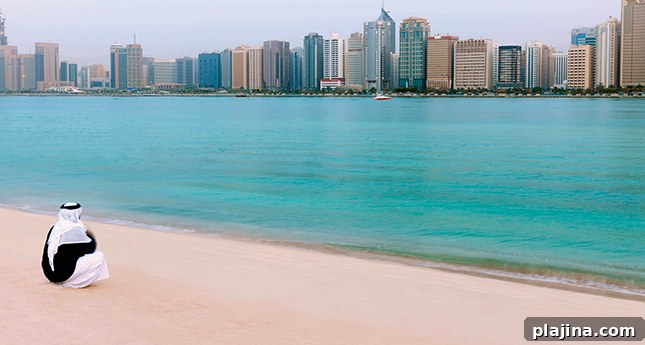
The United Arab Emirates marks its 40th year as a federation of independent sheikhdoms this year. In that relatively short time, Abu Dhabi, the nation’s capital, has been transformed from vast desert inhabited by nomadic tribes into a dynamic, cosmopolitan city. And the emirate’s development is far from finished.
Abu Dhabi’s rise has been rapid and deliberate. The discovery of oil in 1958 set the stage for a dramatic change: revenues from oil were invested in infrastructure, services and urban development that scarcely existed half a century ago. Today, Abu Dhabi is the largest and most populous of the seven emirates, with population growth averaging about 4.7 percent annually. Projections suggest the population could approach three million by 2030.
The emirate’s society reflects a global mix: Emirati nationals make up roughly 20 percent of residents, while the remaining 80 percent are expatriates from Asia, Africa, Australia, Europe and North America. While Islamic traditions are central to daily life and public culture, Abu Dhabi is welcoming and accommodating of many customs and international influences.
Oil remains a major driver of the economy, but Abu Dhabi has actively diversified. Tourism, in particular, has emerged as a strategic sector guided by the Abu Dhabi Tourism Authority. ADTA initiatives include a standardized hotel and apartment classification system and a certified training program for tourist guides—steps designed to improve consistency and the visitor experience.
With a goal of attracting 2.3 million hotel guests annually by 2012, the government has launched a variety of hospitality and cultural projects. One of the most ambitious is Saadiyat Island. While the island’s full development is ongoing, Manarat Al Saadiyat, the on-site visitor center, provides a preview of what’s planned.
Saadiyat Island is being planned as seven distinct districts. The Saadiyat Cultural District will host major museums, including the Zayed National Museum, Guggenheim Abu Dhabi and the Louvre Abu Dhabi. The fact that world-class institutions are establishing branches here shows how quickly the emirate has become a cultural destination.
Education and luxury hospitality are also part of the island’s vision. New York University is developing a satellite campus on Saadiyat, and several five-star resorts—Park Hyatt, Mandarin Oriental and St. Regis among them—are under construction. Leading international firms are evaluating offices on the island, championship golf courses are being created, and renowned chefs and designers are contributing to the local scene.
Though still young as a modern state, Abu Dhabi has already outpaced many developing regions in terms of scale, stability and global reputation.
Diversions
Abu Dhabi continues to expand its offerings for visitors and residents alike. Start with the Sheikh Zayed Grand Mosque, the city’s most recognized landmark. One of the world’s largest mosques, it accommodates up to 40,000 worshippers and is noted for its 80 domes, 1,000 columns and the world’s largest hand-woven carpet. The mosque welcomes non-Muslim visitors and provides complimentary one-hour tours throughout the day. The mosque honors Sheikh Zayed, the nation’s founding leader; for insight into his life, visit the Zayed Centre—book tours in advance.
In the city center, Capital Gate stands out as an architectural oddity—it leans 18 degrees to the west, more than three times the tilt of the Leaning Tower of Pisa. Falconry remains an important cultural practice; visitors can learn about the sport and its care traditions at the Abu Dhabi Falcon Hospital. Khalifa Park is one of the city’s largest green spaces and a favorite for families and tourists.
Shopping ranges from modern malls to traditional souks. Marina Mall houses numerous designer shops for international brands, while the Fish Souk, Al Mina Fruit and Vegetable Souk and the Carpet Souk offer a more authentic market experience. The Souk at Central Market blends traditional ambiance with more than 250 contemporary retail outlets.
Abu Dhabi’s coastal location encourages a wide range of outdoor activities. The Abu Dhabi Corniche spans five miles of waterfront with playgrounds, walking paths, cafés and beaches; Al Bateen Beach also draws sunseekers. For excursions on the water, private and group boat tours provide a view of the skyline and nearby islands. Sailing, dinner cruises, diving and sport fishing are readily available.
Nearly 200 islands surround the emirate, making island-hopping popular. Yas Island hosts the Yas Marina Circuit, the track for the annual Formula 1 Etihad Airways Abu Dhabi Grand Prix, as well as Yas Links Abu Dhabi golf course, multiple luxury hotels and Ferrari World, home to the Formula Rossa rollercoaster. Inland, visitors can pursue cricket, golf and tennis or head into the desert for camel trekking, dune driving and guided desert walks.
Info To GoLocated at the crossroads of three continents, Abu Dhabi is well connected by direct and single-connection flights to major global destinations. Abu Dhabi International Airport (AUH), approximately 20 miles from the city center, provides public bus and taxi services outside Terminals 1 and 2. The national carrier, Etihad Airways, offers chauffeur services for first- and business-class passengers and a complimentary motor coach service for economy-class passengers available at Terminal 1A. Visit the official Abu Dhabi tourism website for up-to-date travel information and services. |
Just the FactsTime Zone: GMT +4 hours Phone Code: +971 (U.A.E.), 2 (Abu Dhabi) Currency: U.A.E. dirham (AED) Entry/Exit Requirements: U.S. citizens require a passport to enter the United Arab Emirates; visas may be required for stays longer than 30 days depending on nationality and travel purpose. Official Language: Arabic; English is widely used Key Industries: Oil and gas, tourism |
LodgingEmirates Palace Abu Dhabi An iconic luxury hotel on a private beach, Emirates Palace is one of Abu Dhabi’s most opulent properties. West End Corniche, tel 971 2 690 9000 Shangri-La Hotel Qaryat Al Beri Beyond a city hotel, this property includes residences, private villas, a spa and a souk. Between the Bridges, tel 971 2 509 8888 The Yas Hotel Straddling land and water above Yas Marina Circuit, The Yas Hotel is notable for its dramatic location and design. Yas Island, tel 971 2 656 0000 |
|
DiningFishmarket Fresh seafood in a setting that can include indoor dining or outdoor terraces overlooking the water. InterContinental Abu Dhabi, Bainouna Street, tel 971 2 666 6888 Marakesh Authentic Moroccan and Lebanese cuisine, often paired with live entertainment and an immersive atmosphere. Millennium Hotel Abu Dhabi, Khalifa Street, tel 971 2 614 6000 Marco Pierre White Steakhouse & Grill A menu from award-winning chef Marco Pierre White featuring grilled dishes and classic fare. Fairmont Bab Al Bahr, Between the Bridges, tel 971 2 654 3238 |
|
Checking In with Ali Alsaloom
Cultural Consultant and Founder of Ask Ali
How did Ask Ali begin and what inspired the brand?
Ask Ali began during my time in the United States. I’m Ali Alsaloom, born and raised in the traditional rural area of Baniyas on Abu Dhabi’s outskirts. I studied hospitality and tourism at the University of Central Florida, where I was often the only Arab student. In conversations about the Arab world, classmates frequently turned to me and said, “Ask Ali.” That phrase became the foundation of a brand. After the attacks of September 11, 2001, I remained in the U.S. and continued my work to help people better understand Arabs and Muslims, dispel misconceptions and make clear that violent extremists do not represent our values and traditions.
What questions do American travelers most often ask about the U.A.E.?
Many questions focus on general facts or the business climate. Others address cultural norms—public behavior, women’s roles and traditional lifestyles. People also ask for travel recommendations, such as places to visit and activities to try in the U.A.E.
How can the U.A.E. better promote tourism, and Abu Dhabi specifically?
The answer is to clear up misconceptions and share the true nature of the country: a conservative yet open society where diverse communities live and work together peacefully, irrespective of race, skin color or religion. The U.A.E. embraces religious and cultural plurality—mosques, churches and temples coexist alongside modern entertainment and traditional markets. Our society values mutual respect and practices a “live and let live” ethos, supported by a very low crime rate. When people understand this balance, tourism will naturally increase.
What are the future plans for the Ask Ali brand?
I was recently appointed environmental ambassador by the Environmental Agency of Abu Dhabi, a role that reflects my commitment to conservation. We are developing a book centered on nature and protection, producing a series of videos on preservation projects, and supporting Bu Tina Island’s nomination among the world’s natural wonders. The second extended edition of Ask Ali: A Guide to Abu Dhabi has just been released, and I will continue answering questions about the region through the online portal, social media, public speaking and community engagement.