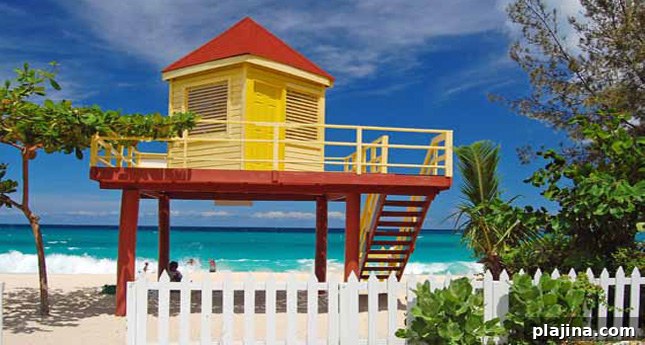
It turns out I’ve been liming most of my life — I just didn’t realize the term until I arrived on Saint Vincent. Liming means idling in a public place, lingering without agenda, and that relaxed art is central to life on this Caribbean island. Once you embrace liming, you saunter rather than walk, seek shade rather than sun, and prefer company or quiet observation over busy schedules.
Saint Vincent has maintained much of that unhurried rhythm since gaining independence from Britain in 1979. It is the largest of the 32 islands that form Saint Vincent and the Grenadines. The Grenadines arc southward like a comet’s tail through clear, turquoise seas, while Saint Vincent itself is the comet’s head: a lush, rugged, volcanic island.
Admiralty Bay, Bequia Island © Pkazmierczak | Dreamstime.com
Despite its size, Saint Vincent has long remained less developed than its neighboring Grenadine isles, many of which host high-end resorts. The mainland’s economy has traditionally depended on agriculture — bananas and arrowroot — leaving large parts of the island relatively untouched. That is changing as infrastructure projects and shifting tourism patterns open up new possibilities.
Saint Vincent’s dramatic volcanic topography is both its defining beauty and its chief obstacle. Steep hills, deep valleys, countless streams and waterfalls, and dense tropical forest create stunning scenery but leave little flat terrain for large-scale infrastructure, including a full international airport. The island’s existing airstrip near the cricket stadium in Arnos Vale accommodates regional turboprops only, so many international visitors bound for the Grenadines have long arrived via Barbados.
To change that, a new airport site was chosen at Argyle on the east coast. Construction on the $240 million project began in 2008. Progress has been gradual, as is often the case on the island, but the airport is now approaching completion and promises to transform access and development across Saint Vincent and the Grenadines.
When more direct international travel becomes routine, Saint Vincent will reveal attractions beyond the typical resort offerings. The leeward west coast boasts attractive white-sand beaches, and nearby Young Island — a brief water taxi ride from Arnos Vale — has long been a favored retreat. The island and surrounding waters even served as filming locations for some of the Pirates of the Caribbean movies.
Yet Saint Vincent’s appeal is not limited to beaches. On the rugged windward coast the Owia Salt Pond is a distinctive natural attraction: a sheltered coastal pool formed among volcanic rocks where locals and visitors swim and relax. Take care while wading — sea urchins are present in some areas — but the experience is authentically Vincentian.
The island’s most imposing landmark is La Soufrière, an active volcano in the north whose presence dominates the landscape. Multiple trails of varying difficulty lead up and around its eroded slopes, with an ambitious route that crosses the island via the cratered summit. The hike is spectacular but challenging; foreign hikers are required to travel with local guides who know the mountain’s weather and terrain. Eruptions are rare but possible — La Soufrière last erupted in 1979 — so preparation and local guidance are essential.
Saint Vincent’s forests are home to the Saint Vincent parrot, a colorful endemic species that nearly went extinct in the 20th century but has rebounded thanks to conservation efforts. If you don’t encounter one in the wild, the Saint Vincent Botanical Gardens in Kingstown offer a good chance to see these parrots up close in an aviary setting.
Strong Atlantic winds can affect small aircraft, which is one reason populations of some species, like parrots, evolved separately on individual islands. When flights are disrupted, inter-island ferries provide a reliable alternative. On one trip, my flight from Arnos Vale to Bequia was canceled due to a gale, so I boarded a ferry in Kingstown instead.
The crossing to Bequia took about an hour through choppy seas. Although rough for a landlubber, the passage led into Admiralty Bay, a natural harbor ringed by Port Elizabeth and dozens of moored yachts. Bequia is smaller than Saint Vincent but serves as an attractive sailing destination and a gateway to the Grenadines’ maritime life.
Caribbean-style grilled filet of cavalli kingfish with a view of Admiralty Bay © Robert Lerich | Dreamstime.com
After a rough ferry ride I was ferried out to a yacht, where the crew prepared the boat and raised the anchor. Once we left the sheltered harbor, the wind filled the sails and the yacht leaned into the waves. Moments like that bring the romance of island sailing to life — a reminder of why the Grenadines draw sailors and yachting enthusiasts from around the world.
My sail was only a half-day excursion. Back on Bequia that evening, I embraced the island’s slow tempo: barefoot strolls, shaded pauses, and a day spent liming on a quiet beach. Other Grenadine highlights — Mustique’s exclusive hideaways, Canouan’s diving and golf, Union Island’s rugged, Saint Vincent–like terrain — remain for future trips. Each island offers its own character, but together they form a cohesive archipelago of relaxed island life.
Saint Vincent and the Grenadines Info to Go
Most international visitors currently arrive via Grantley Adams International Airport in Barbados, with scheduled and charter flights onward to Saint Vincent and the Grenadines. Saint Vincent’s E.T. Joshua Airport at Arnos Vale serves regional destinations, while the new international airport at Argyle is expected to improve direct access once completed. Ferry services connect Saint Vincent with Bequia and other Grenadine islands, and crewed yacht charters are widely available for island-hopping and sailing exploration.
Where to Stay in Saint Vincent and the Grenadines
Bequia Beach Hotel — A relaxed, upscale beachfront property offering suites and private villas with pools. Friendship Beach, Bequia.
Buccament Bay Resort — An all-inclusive resort on Saint Vincent’s west coast, representing potential future development on the mainland.
The Cotton House — An exclusive resort on Mustique, known for privacy and high-end service.
Restaurants in Saint Vincent and the Grenadines
The Fig Tree — Overlooking Admiralty Bay in Belmont, Bequia, this restaurant serves Caribbean specialties and fresh seafood.
Firefly Restaurant — A fine-dining venue on Mustique that requires reservations and often attracts high-profile guests.
The French Verandah Restaurant — Located at Mariners Hotel on Villa Bay Beach, Saint Vincent, this restaurant offers local ingredients prepared with a French touch and lovely seaside views.