Much of the global business travel industry has already made sustainable travel a priority, focusing on reducing emissions and minimizing environmental impact. Still, companies, industry stakeholders and policymakers agree that more decisive action is needed to meet climate goals and ensure the future of business travel.
Those are among the findings of a landmark study from the Global Business Travel Association (GBTA) and Grayling titled The State of Sustainability in the Global Business Travel Sector. The research combines survey data and expert input from business travel buyers, suppliers, policymakers, think tanks and NGOs to paint a detailed picture of where the sector stands and where it must improve.
“There’s no longer a debate about whether we should pursue sustainable actions for business travel, but about how we turn ambition into action. Investing in sustainable solutions must be part of our game plan today to make sure we can still connect people and travel for business tomorrow,” said Delphine Millot, senior vice president, sustainability, GBTA.

© GBTA
The report highlights both barriers and opportunities for accelerating sustainability across the sector. It also provides in-depth data showing current commitments and planned actions from across the global business travel ecosystem.
Key takeaways from the study include:
- 89 percent of respondents say sustainability is already a priority within their organization.
- Only 14 percent believe the industry is currently well advanced on sustainability, indicating significant room for progress.
- Improvements are underway: 76 percent of travel buyers have already, or plan to, incorporate sustainability objectives into their travel policies.
- 80 percent of industry organizations report having a dedicated sustainability team and/or program.
- 88 percent of the sector identifies addressing climate change as the top priority for action.
- Industry respondents say the most impactful measures include prioritizing energy-efficient accommodations (81 percent), selecting suppliers with sustainability certification (78 percent), and supporting flights using sustainable aviation fuel (SAF) (73 percent).
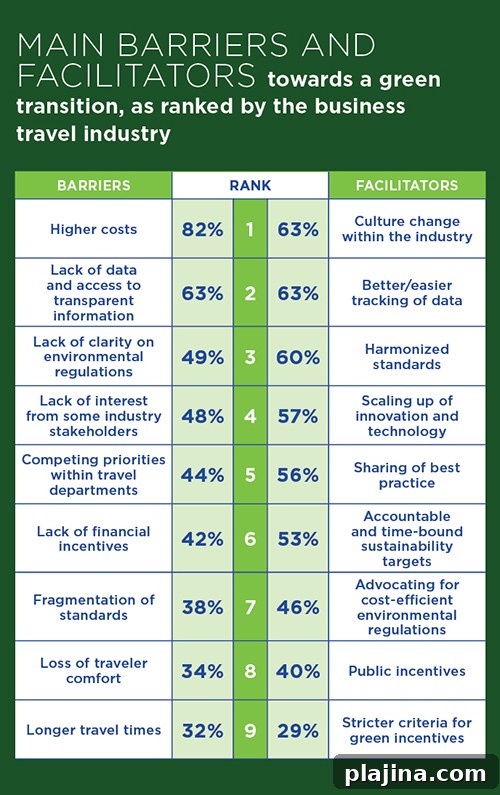
- External stakeholders identify higher costs (58 percent) as the chief barrier to progress, and nearly two-thirds (62 percent) point to a lack of interest among some industry actors.
© GBTA
The full GBTA research report, The State of Sustainability in the Global Business Travel Sector, offers detailed findings, benchmarks and practical recommendations for organizations seeking to accelerate decarbonization and embed sustainability into travel programs.
In addition to publishing this research, GBTA continues to advance industry action through its Sustainability Program and partnerships with founding sustainability partners. The association also convenes stakeholders to share best practices and develop collaborative solutions to reduce emissions from business travel.
GBTA will host its first Global Sustainability Summit in Brussels on Nov. 8, 2022, bringing together experts, industry leaders and policymakers to outline concrete steps for decarbonizing business travel and scaling sustainable solutions within corporate travel programs.