
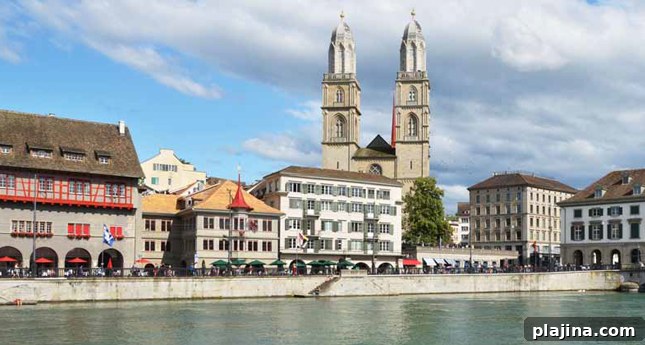
Set between wooded hills at the northern end of Lake Zürich in north-central Switzerland, the city of Zürich surprises many visitors. Rather than towering glass-and-steel skyscrapers, you’ll find tree-lined streets, relaxed lakeside cafés and river beaches that give the place a small-town feel. Yet beneath that unassuming exterior lies one of the world’s most important financial centers, home to major corporate headquarters and global financial institutions.
This carefully preserved small-town character is the result of deliberate urban planning that prioritizes quality of life. With just under 400,000 residents, Zürich is Switzerland’s largest city, but it has strict building limits and nearly 40 percent of its area devoted to green space. Still, tucked among the narrow lanes of the Old Town are some of Europe’s most powerful financial players, including UBS, Credit Suisse, Swiss Re and ABB. SIX Swiss Exchange, the national stock exchange, is based here, and Zürich hosts the world’s largest gold trading center—proof that appearances can be deceiving.
Under the relaxed façade is a highly efficient infrastructure, including fast and frequent public transport. The local language is German, and while French and Italian are also official languages of Switzerland, English is widely spoken as a common second language. Visitors will find most people able to communicate comfortably in English.
Switzerland is not in the European Union and does not use the euro; the currency is the Swiss franc (CHF), which is roughly on par with the U.S. dollar. Airports and tourist services often accept euros and dollars but typically return change in Swiss francs; taxis commonly accept major credit cards. High quality of life comes with a higher cost: according to a business travel index, Zürich ranks among the world’s more expensive destinations for hotels, dining and business travel expenses.
At Zürich Airport, taxis wait outside Arrivals 1 and 2; a ride to the city center is about CHF 70 and takes roughly 25 minutes. For a quicker and cheaper option, follow signs to the rail station beneath the terminal for an approximately 11-minute ride to Hauptbahnhof (central station) for around CHF 7; trains depart every 10–15 minutes. Chauffeured limo services with multilingual Swiss drivers are also available for curbside pickup on arrival.
Getting around Zürich is straightforward. The Old Town runs along the Limmat River as it flows north from the lake and contains many corporate offices, historic buildings, churches, shops and restaurants. The former industrial district Zürich West, now revitalized, offers trendier eateries, a lively nightlife and contemporary galleries and boutiques. North of the Old Town, in the Oerlikon district, you’ll find Messe Zürich and Hallenstadion, the city’s main exhibition, congress and multifunctional venues. Most major hotels cluster in the Old Town and along the lakeshore, with several newer properties in Zürich West and Oerlikon. The public transit system is well marked and easy to use, and taxis can be hailed on the street or requested by phone.
Start your morning with a power breakfast at a beloved Old Town institution where locals and visitors alike gather. A historic confiserie and café offers an upstairs salon with freshly baked breads, Gruyère quiche and classic Swiss Bircher Muesli—simple, refined options that make a good impression on business companions. Another charming traditional café nearby pairs elegant interiors and wall murals with a menu of omelets, croissants and Viennese pastries, while a Euro-chic brasserie near the Opera House serves excellent eggs Florentine, crêpes and other breakfast staples.
For a more formal option, one of Zürich’s most prestigious hotels frequently appears on “best hotels” lists and features a Michelin-starred restaurant and an elegant breakfast service. The hotel’s dining rooms are ideal for impressing clients, with impeccable service and classic favorites such as eggs Benedict. Its kitchen also offers seasonal, refined lunch menus showcasing fresh seafood and delicate appetizers for those seeking a more memorable midday meal.
Choosing a venue for a business lunch is a pleasant challenge in a city known for excellent dining. If time is short for visiting Zürich’s museums, many restaurants offer interiors filled with original artworks and refined décor. One historic dining room, long associated with artists and intellectuals, combines high-backed booths and wood paneling with a menu that complements the cultured atmosphere—an ideal spot for relaxed conversation and business discussions.
Hiltl restaurant © Zürich Tourism / Nikkol Rot
For a different ambiance, a restaurant inside a boutique hotel features walls and ceilings adorned with monochromatic opera scenes, creating a dramatic backdrop for sustainably sourced seafood and well-paced conversation. Europe’s first vegetarian restaurant, founded in the late 19th century, remains a popular choice thanks to its inventive menu and wide variety of plant-based dishes—an excellent option even if your party includes non-vegetarians.
Afternoon meetings can be comfortably scheduled around traditional high tea at several luxury hotels. Elegant lobbies and redesigned lounges provide tranquil settings for scones, savory sandwiches and pastries, and can easily segue into pre-dinner cocktails by adding Champagne, caviar or smoked fish to the offering.
For pre-dinner drinks, the city offers a range of distinguished bars: lively downtown spots, an atmospheric tower bar with panoramic city views, and historic hotel bars known for expertly crafted martinis and extensive single-malt selections. Even in smoke-free Zürich, some venues maintain a dedicated fumoir for guests who wish to pair a fine cigar with classic cocktails in refined surroundings.